Social Media Automation vs Scheduling: What's the Difference?
Automation and scheduling are not the same thing. Learn the difference between social media automation and scheduling, when to use each, and which approach actually grows your accounts.
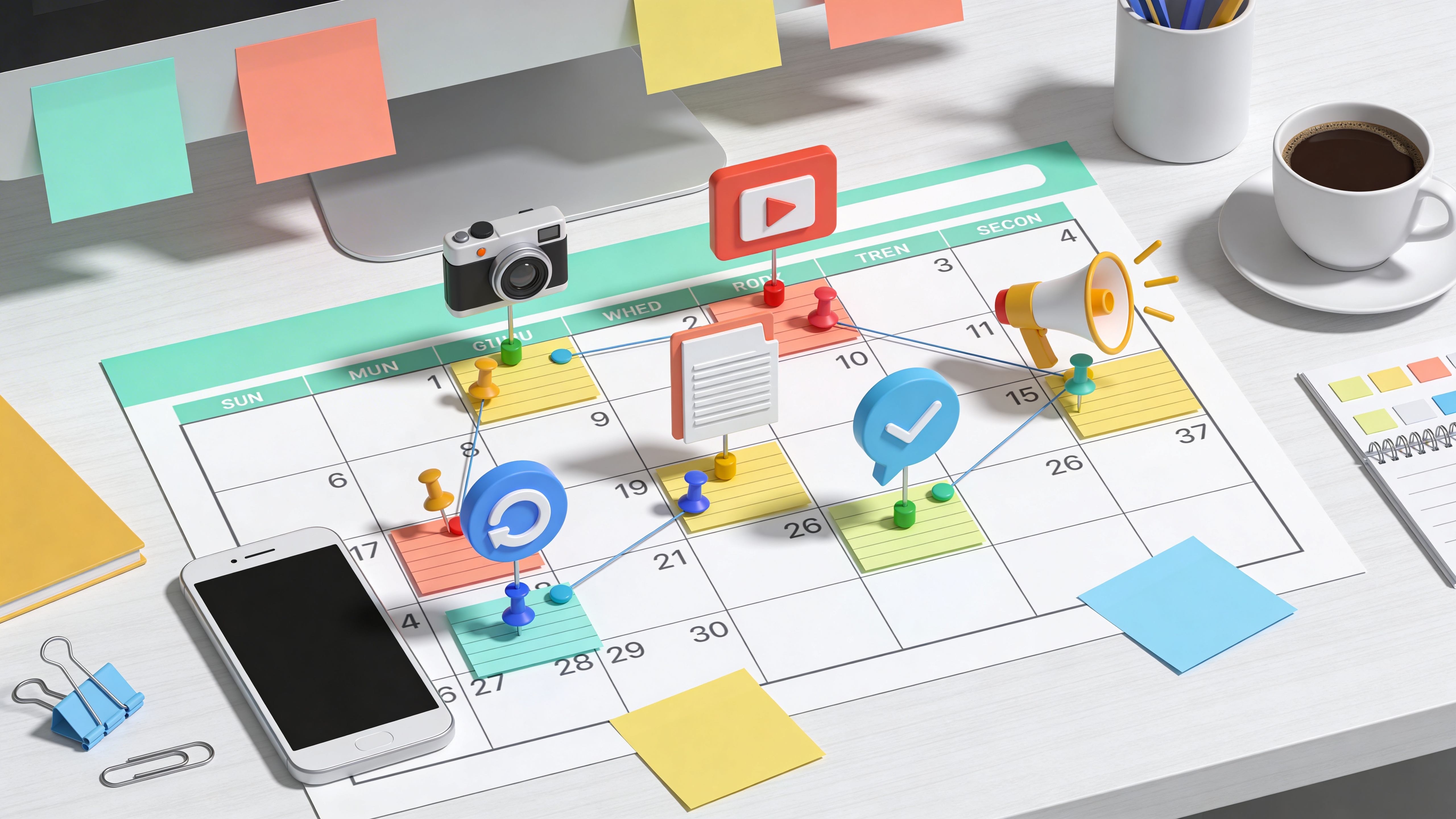
They're Not the Same Thing
"Automation" and "scheduling" get used interchangeably in social media marketing, but they refer to very different things — and confusing them can hurt your accounts.
Scheduling means choosing when your content goes live. You write the post, pick a date and time, and a tool publishes it for you at that moment.
Automation means removing human decisions from parts of the workflow. Auto-replies, auto-follows, auto-liking, content spinning, AI-generated posts published without review — that's automation.
The distinction matters because platforms actively penalize automation while rewarding scheduled, high-quality content.
Social Media Scheduling: What It Includes
Scheduling is the practice of preparing content in advance and queuing it for future publication. Here's what a scheduling workflow typically looks like:
- Batch create content — write captions, edit videos, design images in one session
- Choose platforms — select which networks each post goes to
- Set publish times — pick optimal dates and times for each post
- Auto-publish — the scheduling tool posts it at the right time via the platform's official API
What scheduling tools handle:
| Feature | Example |
|---|---|
| Timed publishing | Post goes live at 9 AM Tuesday |
| Multi-platform posting | Same video goes to TikTok, Instagram, YouTube |
| Content calendar | Visual overview of your scheduled week/month |
| Queue management | Reorder, reschedule, or cancel upcoming posts |
| Per-platform captions | Different copy for LinkedIn vs Instagram |
What scheduling does NOT do:
- It doesn't write your content for you
- It doesn't interact with your audience
- It doesn't follow or unfollow accounts
- It doesn't auto-reply to comments or DMs
Scheduling is a time-saving tool. You still create the content and make all creative decisions.
Social Media Automation: What It Includes
Automation goes further. It replaces human actions with software-driven actions. Some forms of automation are useful; others violate platform terms of service.
Safe automation:
| Type | What it does | Risk level |
|---|---|---|
| Scheduled publishing | Posts at a set time | None — this is standard |
| RSS-to-social | Auto-shares new blog posts | Low — if you customize captions |
| Auto-reposting | Recycles evergreen posts | Low–Medium — depends on frequency |
Risky automation:
| Type | What it does | Risk level |
|---|---|---|
| Auto-following/unfollowing | Follows accounts to get follow-backs | High — violates most ToS |
| Auto-liking/commenting | Likes or comments on posts automatically | High — accounts get flagged |
| Auto-DMs | Sends direct messages to new followers | High — universally disliked |
| Content spinning | Rewrites posts with synonyms to appear unique | Medium — low quality, detectable |
| Bulk bot engagement | Uses fake accounts to boost metrics | Very High — account ban |
Why platforms crack down on automation:
Every major platform (Instagram, TikTok, LinkedIn, YouTube) uses behavioral detection to identify automated actions. Signs they look for:
- Actions happening at inhuman speed (liking 200 posts in 5 minutes)
- Identical comments posted across many accounts
- Follow/unfollow patterns (follow 500 people, unfollow 480 three days later)
- API calls from unauthorized third-party tools
Penalties range from shadowbans to permanent account suspension.
When Scheduling Beats Automation
For most creators and businesses, scheduling is the right approach. Here's why:
1. You keep creative control
Scheduling means every post is written, reviewed, and approved by you (or your team) before it goes live. Automation that generates or reposts content without review leads to off-brand, low-quality posts.
2. Platform algorithms reward quality, not volume
Instagram, TikTok, and LinkedIn all prioritize content that gets genuine engagement. Ten well-crafted scheduled posts will outperform 100 auto-generated posts every time.
3. It's sustainable
Scheduling lets you batch one day per week and cover the entire week. That's a sustainable rhythm. Automation tempts you to scale volume beyond what you can maintain quality-wise.
4. No risk of account penalties
Scheduling through official APIs (which tools like PostLink use) is explicitly allowed by every platform. Automation tools that simulate human actions operate in a gray area — or a very clear red zone.
When Automation Makes Sense
Not all automation is bad. Some forms are genuinely useful:
RSS-to-social posting. If you publish blog posts regularly, automatically sharing new articles to your social accounts saves time. Just make sure the captions are customized, not generic "New post:" links.
Evergreen content recycling. Reposting your best-performing content on a rotation can work — but space it out (every 30–60 days minimum) and refresh the caption each time.
Chatbots for customer service. Auto-replies for common questions ("What are your hours?", "Do you ship internationally?") on Facebook Messenger or Instagram DMs can improve response time without hurting your account.
Analytics and reporting. Automated reports on post performance save hours of manual data collection.
The Hybrid Approach: Schedule + Selective Automation
The most effective social media workflow combines scheduling with light, safe automation:
| Task | Approach |
|---|---|
| Content creation | Manual — you write and design everything |
| Publishing | Scheduled — batch and queue for optimal times |
| Cross-platform posting | Scheduled — one upload, multiple platforms |
| Blog sharing | Automated — RSS-to-social with custom captions |
| Engagement (comments, replies) | Manual — no automation |
| Analytics | Automated — weekly performance reports |
| Following/unfollowing | Manual only — never automate |
This gives you the time savings of scheduling and the efficiency of safe automation, without the risks.
How to Set Up a Scheduling Workflow
If you're currently posting manually or considering automation, here's a simple scheduling workflow:
1. Pick one day for content creation
Most creators batch on Sunday or Monday. Write all captions, edit all videos, and prepare all images in one session.
2. Use a scheduling tool
Upload your content, select platforms, and schedule publish times. Tools like PostLink let you schedule to TikTok, Instagram, YouTube, Facebook, Threads, and Pinterest from one dashboard.
3. Schedule at platform-specific peak times
Each platform has different peak engagement windows. Use your scheduling tool's analytics or our platform-specific timing guides to find your best posting times.
4. Stay available for engagement
Schedule your posts, but don't walk away entirely. Check in 1–2 times per day to reply to comments and DMs. The content is automated; the conversation should be human.
Summary
| Scheduling | Automation | |
|---|---|---|
| What it does | Publishes your content at a set time | Replaces human actions with software |
| Content quality | High — you create everything | Varies — often lower |
| Platform risk | None | Medium to Very High |
| Best for | Consistency, time saving | Reporting, RSS sharing |
| Engagement impact | Positive | Neutral to Negative |
The bottom line: schedule your content, automate your reporting, and keep your engagement human. That's the formula that grows accounts in 2026.